
Automated Real Estate Follow-Up for Professionals
Real Estate, Automation, Follow-Up Systems
The Right Way to Set Up Automated Real Estate Follow-Up Sequences Targeting Professionals
In a market where serious buyers and sellers expect fast, polished communication, the realestateagent who masters automated follow-up wins. This guide walks you through building professional, effective real estate automated follow up sequences that feel personal, protect your time, and consistently convert real estate leads into long-term clients.
Why Professionals Need a Different Kind of Real Estate Follow-Up
When your ideal client is a busy professional—executive, doctor, attorney, business owner—the usual “check-in” drip campaigns are not enough. These clients are short on time, high on expectations, and quick to judge whether a real estate agent operates with the same level of professionalism they do. That is where thoughtful real estate automation shines: it delivers timely, relevant touchpoints without you typing the same email a hundred times a month.
The goal is not to blast more messages. The goal is to design a real estate follow up experience that respects a professional’s schedule, anticipates their questions, and positions you as an organized, experienced real estate agent who runs tight real estate systems behind the scenes. Done right, your real estate automated responses feel like a thoughtful assistant, not a robot.
Step 1: Clarify Your Professional Personas and Journeys
Before touching your real estate CRM, define who you are targeting and what they truly need. For professional clients, broad categories like “buyer” and “seller” are not specific enough. Instead, think in terms of personas and journeys:
Time-poor executives relocating for work, needing concise, high-level updates and strong logistics support.
Medical professionals with irregular hours who rely on text and email more than phone calls.
Investors and entrepreneurs focused on numbers, returns, and opportunities across multiple properties.
Each persona moves through a different journey: initial inquiry, qualification, active search or listing, under contract, closed, and long-term nurture. Your real estate automated follow up sequences should mirror these stages, so every message feels relevant to where that professional is right now—not generic “hope you are well” emails sent at random intervals.
Step 2: Choose a Real Estate CRM That Supports Smart Automation
The right real estate CRM is the backbone of your real estate systems. To set up professional-grade real estate automation, look for a platform that offers:
Robust tagging and segmentation: You should be able to tag contacts by profession, price range, timeline, and source of real estate leads, then trigger different workflows based on those tags.
Multi-channel automation: Email, SMS, and sometimes even voicemail drops or task reminders, so you can blend automated and personal touches.
Conditional logic: If a lead opens an email, clicks a link, schedules a call, or goes silent, your real estate automated responses should adapt automatically.
An experienced real estate agent treats the CRM as a command center, not just an address book. Every professional contact is organized, tagged, and routed into the right sequence within minutes of entering your database. That discipline is what makes your real estate automation feel effortless later on.
Step 3: Map Out Core Sequences for Professional Clients
Think of your real estate follow up as a series of well-designed journeys. For professionals, there are four core sequences you should build into your real estate systems:
1. Instant Response and Qualification Sequence
The moment a professional submits an inquiry or downloads a guide, your real estate automated responses should fire. The first email or text acknowledges their request, sets expectations for response times, and offers a quick, low-effort next step—such as a link to your scheduling calendar. Busy professionals appreciate clarity and control over their time, so make it simple to book a call without back-and-forth messages.
2. High-Value Nurture Sequence for Not-Yet-Ready Prospects
Many Real Estate Leads from professional circles are early-stage: they are curious, exploring options, or waiting for a contract or promotion. Your nurture sequence should deliver concise, insight-driven content such as market updates for their neighborhood, quick video breakdowns of buying or selling timelines for executives, and case studies of similar professionals you have helped. This is where a real estate agent can demonstrate authority without demanding immediate action.
3. Active Client Sequence During Search or Listing
Once a professional becomes an active client, real estate automation should support—not replace—your personal communication. Automated reminders about upcoming showings, document deadlines, and status updates keep everyone aligned. Your real estate CRM can trigger checklists, send day-before reminders, and follow up after key milestones, so nothing falls through the cracks even when your calendar is packed.
4. Long-Term Relationship and Referral Sequence
Professionals often have strong networks. After closing, a long-term real estate automated followup sequence keeps you top of mind with quarterly market snapshots, home maintenance reminders, and personalized anniversary messages. By segmenting past clients by profession and property type, an experienced real estate agent can send highly relevant updates that naturally lead to introductions and repeat business.
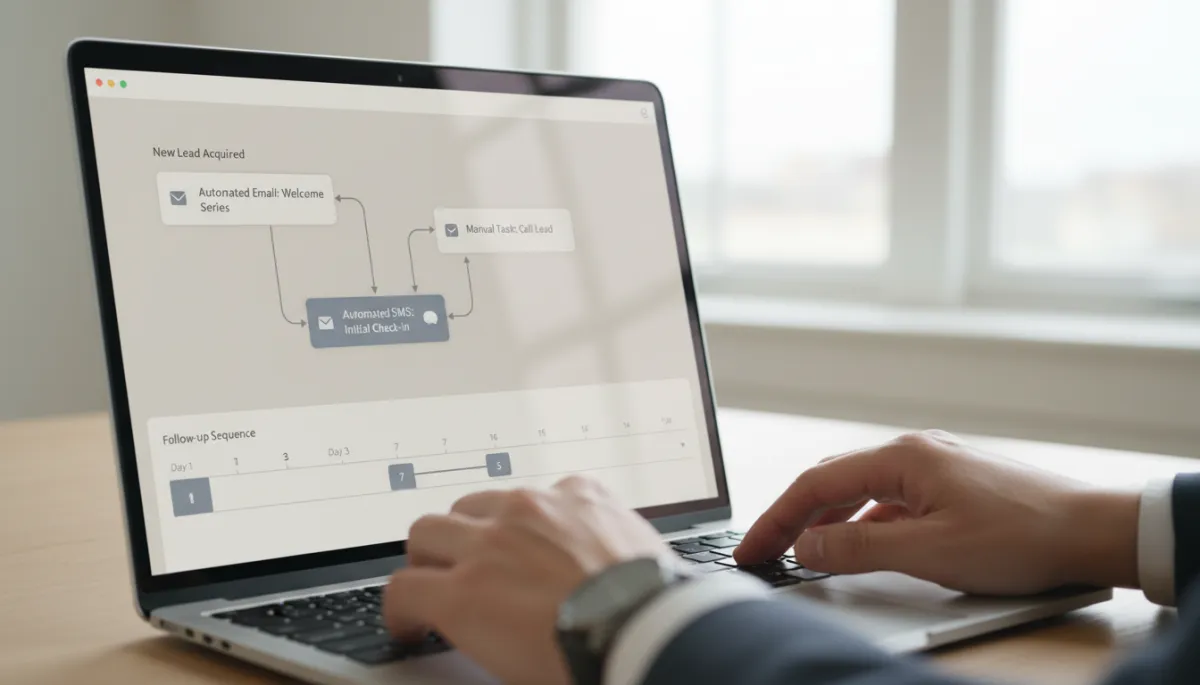
Well-structured automation workflows turn every professional lead into a managed relationship.
Step 4: Write Professional-Grade Messages That Still Feel Human
Automation fails when messages sound robotic or irrelevant. For professional audiences, tone matters as much as timing. Here are key guidelines when crafting your real estate automated responses:
Lead with value, not fluff: Start with a clear benefit or insight, such as “Here is a 60-second snapshot of how inventory changed in your target neighborhood this month.”
Keep it concise: Professionals skim. Use short paragraphs, bullets, and specific subject lines that tell them exactly why the message matters.
Personalize with more than a first name: Reference their timeline, profession, or property goals using merge fields and tags from your real estate CRM.
A skilled real estate agent also builds in moments where automation hands off to a personal touch. For example, your system might automatically send a message saying, “I will personally review the latest listings that match your criteria this afternoon and send you a short list,” followed by you manually curating that list. Real estate automation sets the expectation; your expertise delivers the result.
Step 5: Use Triggers and Conditions to Respect Their Time
Professionals notice when you keep sending the same generic follow-ups after they have already replied or booked an appointment. To avoid this, configure your real estate systems with smart triggers:
Stop or pause a sequence when a lead schedules a consultation, replies to an email, or is moved to a new stage in your pipeline.
Branch into a different real estate automated follow up path if they click on investor content versus primary-residence content.
Trigger a higher-touch task for you or an assistant when a high-value real estate leads contact goes quiet for a certain number of days.
This level of nuance is what separates basic drip campaigns from a true professional-grade real estate follow up machine. It shows that your business is built on systems that adapt, not scripts that ignore context.
Step 6: Measure, Refine, and Protect Your Brand
Finally, treat your Real Estate Automation like any other key business asset: monitor it, refine it, and ensure it reflects the standards of an experienced real estate agent. Track open rates, reply rates, booked appointments, and deals closed from each sequence. If a particular set of messages underperforms, adjust the timing, subject lines, or value offered until your metrics improve.
Just as important, periodically read through every automated message to confirm it still matches your brand voice and current market realities. Markets shift, regulations change, and your positioning evolves. Your real estate CRM should make it easy to update templates and roll out improvements across all active workflows, so your real estate automated responses never feel outdated or off-key to discerning professional clients.
Bringing It All Together: Systems That Serve You and Your Clients
The right way to set up automated real estate follow-up sequences targeting professionals is not about replacing human connection. It is about building real estate systems that ensure no real estate leads slip through the cracks, every interaction feels intentional, and your calendar is reserved for the conversations that truly require your expertise. When a real estate agent combines a smart real estate CRM, well-designed workflows, and thoughtful content, automation becomes an extension of their professionalism—not a shortcut around it.
By defining clear personas, mapping journeys, crafting high-value sequences, and using conditional logic to respect your clients’ time, you create a real estate automated follow up engine that quietly works for you every day. Over time, this consistent, polished real estate follow up builds trust, positions you as the go-to experienced real estate agent for busy professionals, and turns your database into a reliable, system-driven source of high-quality business.
Shawn Bell is the founder of The Realtors Blueprint, a system installation platform built specifically for experienced agents. If you recognized your business in this article, the [Leak Check] shows you exactly where your follow-up infrastructure is breaking down — and what to fix first.


