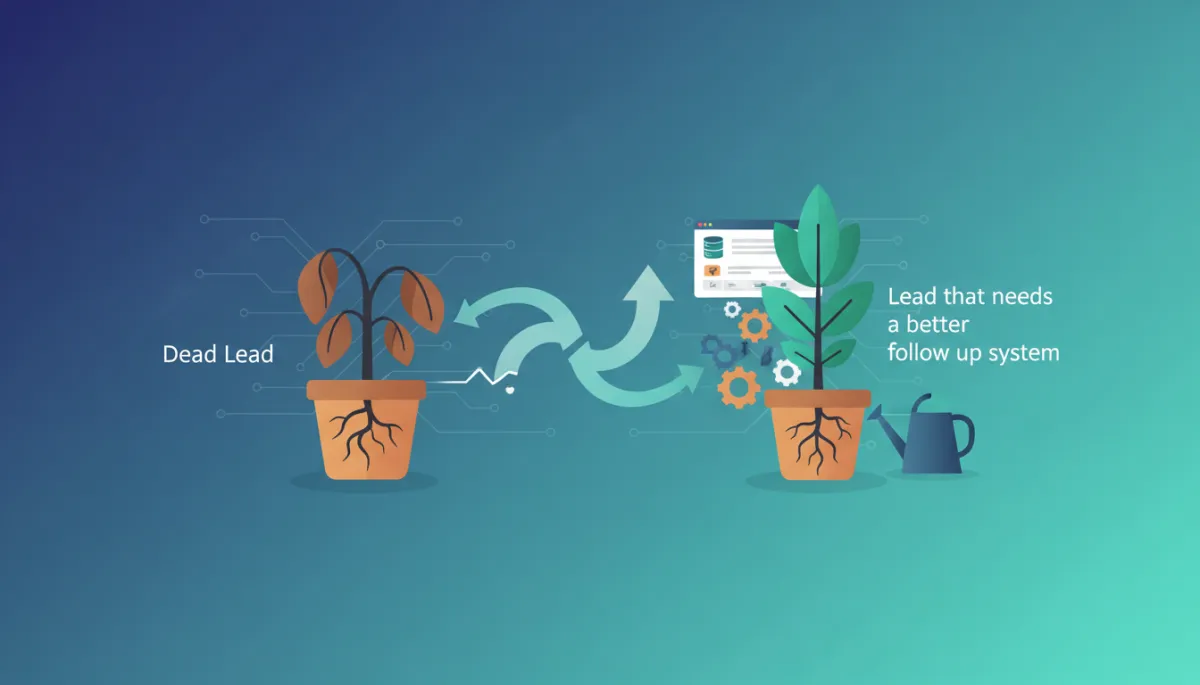
Identify Dead Leads vs. Follow-Up Issues
Real Estate, Lead Management, Sales Systems
Dead Lead or Broken Follow-Up? How Top Real Estate Professionals Tell the Difference
Many real estate professionals quietly lose thousands in commission every year, not because they lack leads, but because they mislabel “slow” prospects as dead instead of fixing their follow-up system.
The Costly Myth of the “Dead” Real Estate Lead
Ask any real estate agent how many “dead” leads sit in their database and you will usually hear a big number. Yet when you dig deeper, many of those contacts simply did not respond quickly, were “just looking,” or chose to wait a few months. That is not the same as being dead. It is a sign that your real estate follow up and real estate systems are not designed to nurture real-world buying timelines.
For an experienced real estate agent, the real question is not “Is this lead dead?” but “Have I actually earned the right to call this lead dead?” In most cases, the honest answer is no. The lead did not die; the follow-up simply stopped too early or was too generic to matter. That is where a modern real estate CRM and intentional real estate lead management come in.
What Is a Truly Dead Lead?
Before you can improve your real estate follow up strategies, you need a clear definition of a genuinely dead lead. Otherwise, your team will keep throwing away future commission checks disguised as “inactive contacts.”
The person clearly states they are not interested in buying, selling, or investing now or in the foreseeable future and asks not to be contacted again.
The lead is confirmed to have used another agent and closed a transaction, and you have no realistic opportunity to add value in the near term.
Contact information is invalid after multiple verification attempts (bounced emails, disconnected phone, no alternative channels).
In other words, a dead lead is one where there is no permission, no possibility, or no path to a future relationship. Anything short of that is usually a lead that simply needs better real estate lead nurturing inside a thoughtful real estate sales funnel.
📌 Key Takeaway: If the lead has not clearly opted out, is not proven closed with another agent, and can still be reached, they are not dead. They are under-nurtured.
Signs Your Lead Is Alive but Your Follow-Up System Is Failing
Professionals often blame the lead when the real issue is the process. Here are common signs that you do not have dead leads—you have a broken follow-up engine.
Inconsistent timing: You call once or twice, send a single email, and then move on. There is no structured cadence built into your real estate CRM.
One-size-fits-all messaging: Every lead receives the same script, regardless of whether they are a first-time buyer, investor, or downsizer.
No documented next step: After each interaction, there is no clear next action or scheduled touchpoint in your real estate lead management workflow.
Leads live in your inbox, not your system: You rely on memory, sticky notes, and scattered spreadsheets instead of a centralized real estate systems framework.
When these patterns show up, it is almost inevitable that good leads slip through the cracks. The lead is not cold; the experience you are giving them is. A serious experienced real estate agent treats this as an operations problem, not a marketing failure.
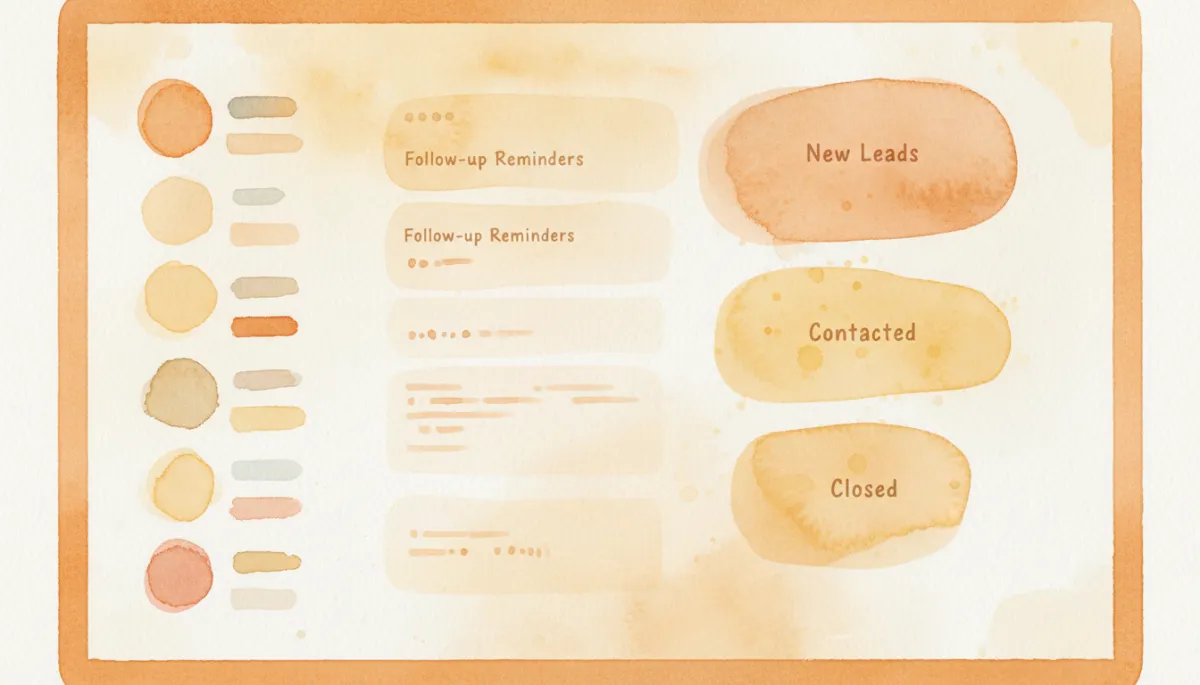
Structured CRM workflows turn “cold” leads into warm conversations over time.
How Professionals Reframe the Lead Journey: From Inquiry to Decision
In reality, most prospects sit somewhere along a spectrum: curious, researching, planning, ready, or urgent. A modern real estate sales funnel acknowledges that people rarely move from first click to closing table in a straight line. Instead of labeling non-responsive prospects as dead, top producers assign them to the correct stage and adjust their real estate follow up strategies accordingly.
Awareness: The lead just discovered you via ad, portal, or referral. Goal: quick response, basic qualification, and value-based introduction.
Consideration: They are exploring options, neighborhoods, or investment ideas. Goal: education, trust-building, and consistent but low-pressure touchpoints.
Decision: The lead is actively viewing homes, comparing agents, or analyzing deals. Goal: frequent, personalized communication and clear next steps.
When your real estate systems are built around stages like these, “no response this week” does not equal “dead.” It simply means the lead remains in a nurturing stage, and your real estate CRM should automatically queue relevant follow-ups instead of letting them vanish into a spreadsheet graveyard.
Practical Follow-Up Framework: Frequency, Channel, and Value
To separate dead leads from neglected ones, professionals use a simple framework: frequency, channel, and value. This framework should be baked into your real estate lead management plan and automated wherever possible through your real estate CRM.
1. Frequency: How Often Is Enough?
A single voicemail and two emails are not a follow-up strategy. For new leads in the early stage, many top agents aim for multiple touches in the first week, then taper to a steady rhythm. A professional cadence might look like:
Day 1–3: Several attempts across phone, text, and email to initiate a live conversation.
Week 2–4: Weekly value-based touches—market updates, property lists, or short educational videos.
Month 2 and beyond: Bi-weekly or monthly check-ins, depending on their timeframe and engagement.
💡 Pro Tip: Use your real estate CRM to pre-build these cadences so every new lead automatically enters a proven follow-up path instead of relying on memory.
2. Channel: Meet Prospects Where They Actually Respond
Many leads appear dead because you are speaking on the wrong channel. Some prospects never answer unknown numbers but respond quickly to text. Others ignore email but engage on social media. An experienced real estate agent tests multiple channels early, then doubles down on what works, tracking preferences in their real estate CRM.
3. Value: Give Them a Reason to Stay in Your Orbit
Repeated “Just checking in” messages are a fast way to turn a warm lead cold. Your real estate follow up should offer something useful every time: a custom list of homes, a short video breakdown of local trends, or a quick analysis of investment potential. This is where intentional real estate lead nurturing separates professionals from dabblers.
Building a System That Protects Every Opportunity
The difference between a dead lead and a neglected one often comes down to whether you have a system or a series of reactions. Professionals do not rely on memory or mood; they rely on structure. A strong real estate systems foundation typically includes:
A centralized real estate CRM where every lead is tagged by source, stage, and priority.
Pre-built workflows for real estate lead management that trigger specific tasks, emails, and reminders based on behavior and timeline.
Clear criteria for when a lead moves from active nurture to long-term nurture, and finally to truly closed or dead.
Reporting that shows how many deals came from long-term real estate lead nurturing versus quick conversions, so you can see the ROI of staying consistent.
A Professional Mindset Shift: From Chasing Leads to Managing a Pipeline
Ultimately, the real distinction between a dead lead and a lead that needs better follow-up is not just tactical—it is mental. Agents who feel perpetually “short on leads” tend to chase new inquiries while quietly abandoning old ones. Professionals view their database as an asset to be managed, not a list to be replaced each quarter.
When you adopt that mindset, your real estate sales funnel becomes a living system. Every new contact enters a defined journey. Every “slow” lead is assigned to an appropriate nurture track. And every so-called dead lead is reviewed against clear criteria, not emotion. Your role shifts from hopeful chaser to confident manager of predictable, compounding opportunities.
Conclusion: Your Leads Are Probably Better Than You Think
For serious professionals, the question is no longer “Why are my leads so bad?” but “Where is my follow-up system weak?” When you define what a truly dead lead is, build intentional real estate follow up strategies, and commit to using a robust real estate CRM, you will discover how many “dead” leads were simply waiting for a better experience.
The difference between a dead lead and a lead that needs a better follow-up system is the difference between a lost commission and a future client. As an experienced real estate agent, you already know how hard it is to generate quality opportunities. Protect them with strong real estate systems, disciplined real estate lead management, and patient real estateleadnurturing. Your pipeline—and your income—will reflect the shift.
Shawn Bell is the founder of The Realtors Blueprint, a system installation platform built specifically for experienced agents. If you recognized your business in this article, the [Leak Check] shows you exactly where your follow-up infrastructure is breaking down — and what to fix first.


