
Effective Real Estate Follow Up Systems
Real Estate, Follow Up Systems, Time Management
How to Build a Follow Up System That Works Even When You’re Busy Closing Deals
In real estate, fortunes are made in the follow up, not just the first conversation. Yet many agents lose deals because their follow up falls apart the moment they get busy. This guide shows you how to design real estate systems and habits so your follow up runs reliably in the background—even when you’re slammed with showings, negotiations, and closings.
Why Most Real Estate Follow Up Fails When You Get Busy
Ask any experienced real estate agent and they’ll tell you: the busiest months are often followed by a painful dry spell. Not because the market died, but because their follow up did. When you’re juggling inspections, appraisals, and last‑minute contract changes, it’s easy to forget the buyer you spoke to last week or the seller who said, “Call me again in a month.”
The problem isn’t a lack of good intentions; it’s a lack of structure. Without a clear, automated real estate follow up system, you’re relying on memory and scattered notes. That approach simply can’t scale as your business and deal flow grow. To protect your pipeline, you need a system that keeps leads warm and engaged even when your calendar is packed.
Step 1: Define Clear Lead Stages and Follow Up Rules
A follow up system starts with clarity. Before you touch a real estate CRM or automation tool, decide how you will classify and treat your leads. This is where many real estate systems break down—everything gets lumped into one messy list called “leads,” and nobody gets the right level of attention.
Create simple, practical stages such as:
New Inquiry: Just registered on your site, called in, or came from an open house.
Warm Lead: Has a clear timeframe (0–6 months) and motivation but isn’t under contract yet.
Nurture Lead: Longer‑term prospects (6+ months) or “someday” buyers and sellers who still need value and education.
Past Client / Sphere: Closed clients and contacts who can send referrals and repeat business.
For each stage, decide on specific follow up rules: how quickly you respond, how often you reach out, and what channels you use (call, text, email, or social). When these rules are written down, you can then translate them into your real estate CRM so the system helps you stay consistent instead of guessing day‑to‑day.
Step 2: Choose a Real Estate CRM That Supports Your Workflow
A powerful real estate CRM is the backbone of a follow up system that doesn’t collapse when your schedule fills up. The right platform should do more than store names and phone numbers; it should act as a personal assistant for realtor lead nurturing and real estate customer engagement.
Automated reminders: The CRM should prompt you when it’s time to call, text, or email, based on the rules you’ve set for each lead stage.
Drip campaigns: It should send pre‑written, value‑driven emails or texts automatically so leads hear from you even on your busiest days.
Activity tracking: You need to see when someone opens an email, clicks a link, or revisits your website, so you can prioritize high‑intent contacts.
Mobile‑friendly: As a real estate agent on the go, you must be able to update notes and follow up tasks from your phone between appointments.
💡 Pro Tip: Don’t chase every feature. Choose a real estate CRM you’ll actually use daily. Simplicity that fits your style beats a complex system you avoid.
Step 3: Automate the Routine, Personalize the Critical Moments
The secret to realtor time management is knowing what can be automated and what must stay personal. A follow up system that works while you’re closing deals leans heavily on automation for routine touches, but keeps room for human connection at key decision points.
Here’s a simple structure you can implement:
Automated: New lead welcome emails, educational market updates, property alerts, and check‑ins for long‑term nurture leads. These keep your name in front of people without requiring daily effort from you.
Personal: First response to a hot lead, follow up after a showing, negotiation discussions, and post‑closing calls. These are the moments where your expertise and personality close the deal.
By letting automation handle the background noise, you protect your energy for high‑impact conversations. This balance is what allows an experienced real estate agent to maintain a high level of real estate customer engagement without working 16‑hour days.
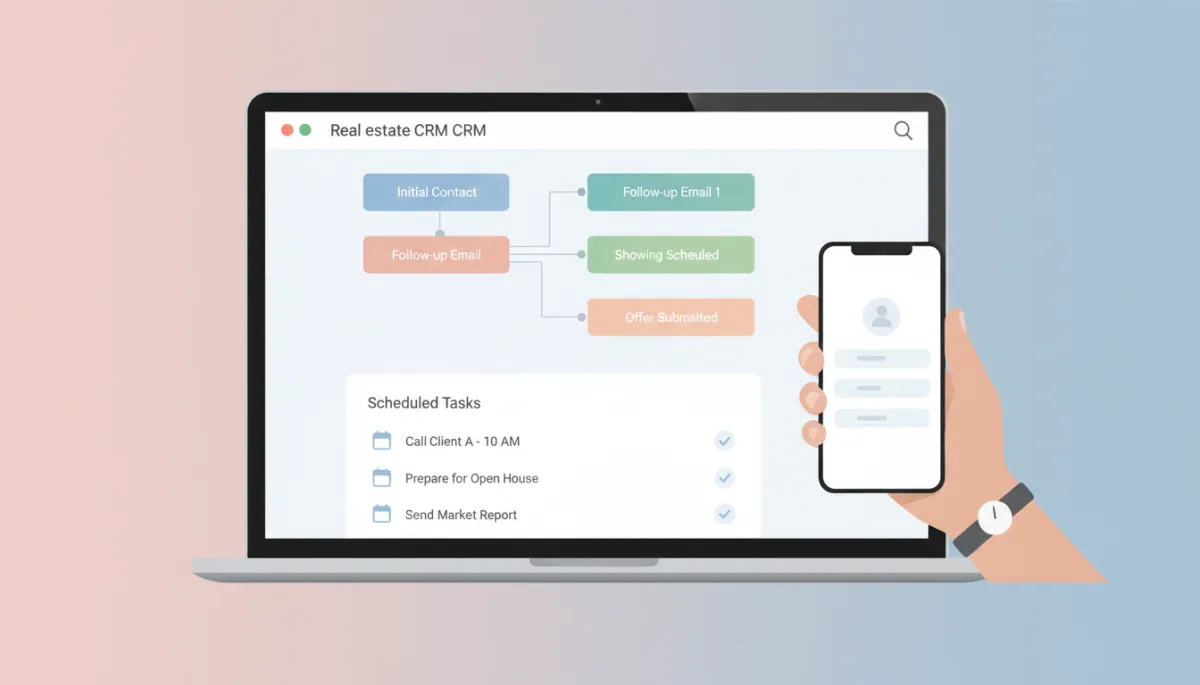
Smart automation frees your calendar so you can focus on high‑value client conversations.
Step 4: Create Simple, Repeatable Follow Up Sequences
Think of your follow up as a set of pre‑built journeys rather than random one‑off messages. For each lead type, map out a basic sequence of touch points over time. This is where real estate systems turn chaos into predictability.
For example, a buyer lead sequence might look like this:
Day 0: Immediate text and email confirming you received their inquiry, with a link to schedule a call.
Day 1–2: Personal phone call and quick needs assessment; add detailed notes to your real estate CRM.
Week 1–4: Automated weekly emails with market insights, plus property alerts tailored to their criteria.
Monthly: Personal check‑in call or text asking how their search is going and if their criteria have changed.
For sellers, your sequence might include a pre‑listing guide, recent neighborhood sales, and periodic updates on buyer activity. The specifics can evolve, but the key is that every new lead gets plugged into a proven realtor lead nurturing path instead of being handled ad‑hoc.
Step 5: Protect Daily Follow Up Time Like an Appointment
Even with automation, there’s no such thing as a completely hands‑off real estate follow up system. You still need dedicated time to make calls, respond to hot leads, and record notes. The difference is that with a strong system, this time is focused and efficient instead of scattered and reactive.
Block 30–60 minutes on your calendar every business day for follow up only—no showings, no paperwork, no distractions. Treat it like a listing appointment: non‑negotiable. During this block, work directly from your real estate CRM task list. Call or message the people with the highest priority activities, then move down the list until your time is up.
💡 Pro Tip: If you struggle with realtor time management, schedule your follow up block at the same time every day—ideally in the morning before urgent fires start popping up.
Step 6: Use Notes and Tags to Personalize at Scale
The difference between forgettable and memorable follow up is personalization. An experienced real estate agent doesn’t just remember budgets and timelines; they remember kids’ names, preferred neighborhoods, and concerns about school districts or commute times. Your memory alone can’t hold all of this, but your CRM can—if you use it correctly.
Add a quick summary after every conversation: key details, objections, and next steps.
Use tags for interests (e.g., “first‑time buyer,” “investor,” “relocating from out of state”) so you can send targeted content later.
Reference past conversations in your messages: “Last time we spoke, you mentioned…” This instantly shows you were listening and builds trust.
With a well‑organized database, real estate customer engagement becomes warmer and more relevant, even though much of your outreach is driven by systems and reminders rather than memory.
Step 7: Don’t Forget Past Clients and Your Sphere
A follow up system that only focuses on new leads is incomplete. Some of your easiest deals and highest‑quality referrals come from people who already know, like, and trust you. Yet many real estate agents go silent after closing, leaving thousands of dollars on the table each year.
Build a simple, automated plan for past clients and your sphere of influence:
Quarterly value emails (home maintenance tips, market updates, tax reminders).
Annual home valuation check‑ins or “equity updates.”
Personal birthday or home‑anniversary messages, ideally with a quick call or handwritten note.
When your real estate systems keep you connected long after the transaction ends, you naturally generate repeat business and referrals without feeling “salesy.” This is realtor lead nurturing at its highest level.
Bringing It All Together: A System That Works While You Work
Building a follow up system that works even when you’re busy closing deals isn’t about adding more to your plate—it’s about designing smarter real estate systems that carry the load for you. When you:
Clearly define your lead stages and follow up rules,
Use a real estate CRM that supports automation and tracking,
Automate routine touches while personalizing key moments,
Protect daily follow up time and document meaningful notes,
And stay in touch with past clients and your sphere,
you create a business where opportunities don’t slip through the cracks just because you’re busy. Instead, your pipeline becomes more predictable, your relationships deepen, and your reputation as an organized, responsive, and experienced real estate agent grows with every interaction.
Start small: choose one segment—new buyer leads, seller prospects, or past clients—and build out a simple follow up sequence in your CRM. As you see results, expand to other segments. Over time, you’ll have a comprehensive real estate follow up machine working quietly in the background, so you can focus on what you do best: advising clients, negotiating deals, and growing a thriving real estate business.
Shawn Bell is the founder of The Realtors Blueprint, a system installation platform built specifically for experienced agents. If you recognized your business in this article, the [Leak Check] shows you exactly where your follow-up infrastructure is breaking down — and what to fix first.


