
Guide: Handling Unresponsive Real Estate Leads
Real Estate, Lead Conversion, Professional Follow-up
What to Say When a Real Estate Lead Stops Responding: A Professional Guide
Even the most organized real estate agent will encounter promising real estate leads that suddenly go silent. How you handle that silence can be the difference between a lost opportunity and a signed contract. This guide outlines exactly what to say, how often to say it, and which real estate systems and real estate CRM strategies support effective real estate follow-up with unresponsive prospects.
Why Real Estate Leads Go Silent (and Why It Is Not Always About You)
Before deciding what to say, it is important to understand why a lead has stopped responding. Even an experienced real estate agent can misinterpret silence as rejection, when in reality the lead may simply be overwhelmed, distracted, or still researching options. Many prospects are juggling work, family, finances, and uncertainty about the market. Your role is to remain professionally present, not pushy, and to provide value with every real estate follow-up touchpoint.
A structured real estate followup plan supported by a reliable real estate CRM ensures you respond to silence with consistency rather than emotion. Instead of guessing, you execute a clear sequence of messages that feel thoughtful, relevant, and respectful of the lead’s time.
Guiding Principles for Following Up with Silent Real Estate Leads
Be concise: Long messages feel like work. Short, clear communication respects your lead’s attention span and increases response rates in real estate follow-up sequences.
Lead with value: Each touch should offer something useful: a market update, a new listing, or a quick insight tailored to their goals. This is where strong real estate systems shine.
Stay neutral, not needy: Your tone as a professional real estate agent should be confident and service‑oriented, never desperate or impatient.
Use multiple channels: Combine email, text, and occasional phone calls, all coordinated through your real estate CRM, so you are visible without becoming intrusive.
💡 Pro Tip: Decide your follow-up rules once, then automate reminders in your real estate CRM. This keeps your real estate follow-up consistent even on your busiest days.
What to Say in Your First Follow-up After Silence
Imagine you have had a productive initial call or showing, sent a recap, and then heard nothing for a week. The first follow-up should assume positive intent and make it easy for the lead to re-engage. Here is a professional, adaptable template you can save inside your real estate CRM:
Subject: Quick check-in about your home search

Hi [Name],

I hope your week is going well. I just wanted to quickly check in
to see if you had any questions about the homes we discussed or
the information I sent over.

No rush at all on your side — I simply want to make sure you have
everything you need to move forward at your own pace.

If it is helpful, I can send a few updated options that match
your criteria, or we can schedule a quick 10-minute call to regroup.

Best regards,
[Your Name]
[Your Title]
This message is brief, professional, and client‑centric. It reinforces your role as an experienced real estate agent who respects timing while remaining proactive. You are not asking, “Why have you not replied?” You are asking, “How can I help you best right now?”
Second Follow-up: Add Targeted Value, Not Pressure
If there is still no response after your first real estate follow-up, your second touch should deliver something specific tied to their goals. Use your notes in the real estate CRM: price range, preferred neighborhoods, timing, or concerns about rates. Then send a message like this, ideally three to five days later:
Subject: New option that fits what you mentioned

Hi [Name],

Based on what you shared about wanting [key criteria, e.g.,
“a three-bedroom home near good schools in X area”], a new
property just came on the market that might be a strong fit.

Here is a quick overview:
- Price: [Price]
- Location: [Area]
- Highlights: [2–3 key features]

If you would like, I can send a brief video walkthrough or
set up a time for a private tour.

Either way, I am here as a resource whenever you are ready.

Best,
[Your Name]
Notice how this approach uses information stored in your real estate systems to create a highly relevant touch. You are demonstrating that you listened carefully and that your real estate leads are more than names in a database.
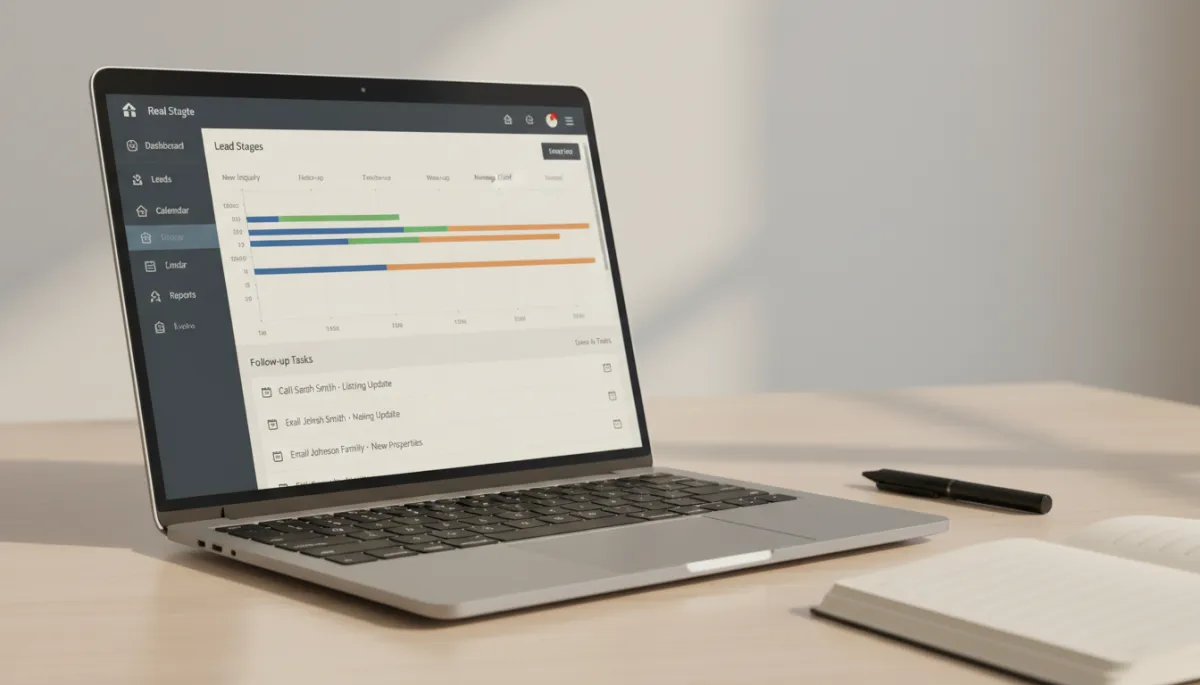
Organized realestateCRM timelines keep every Real Estate Follow-up timely, relevant, and professional.
Third Follow-up: The Permission-Based “Close the Loop” Message
After two well‑crafted touches, it is reasonable to send a third real estate follow-up that acknowledges the lack of response while keeping the door open. This is where many professionals either give up too early or become overly persistent. A balanced, permission‑based message can re‑engage serious real estate leads and gracefully release those who are not ready:
Subject: Would you like me to keep sending options?

Hi [Name],

I have reached out a couple of times and have not heard back,
so I wanted to quickly check in.

I completely understand that timing and priorities can change.
If now is not the right moment to move forward with your plans,
that is no problem at all.

If you would like me to keep you updated with occasional
market insights or listings that match your criteria, I am
happy to do that. If you prefer to pause for now, just let me know.

Either way, I appreciate the opportunity to connect.

Warm regards,
[Your Name]
This style of message aligns with how an experienced real estate agent manages relationships: with clarity, respect, and professionalism. Many leads will respond simply to say, “We are putting things on hold,” which allows you to tag and nurture them properly inside your real estate CRM for future outreach.
When and How to Use Text Messages and Calls
For many real estate leads, a brief text can feel more approachable than another email. A professional real estate agent can use SMS strategically, especially after an email or two has gone unanswered. Keep texts short, friendly, and clearly connected to previous conversations:
“Hi [Name], this is [Your Name], the agent you spoke with about homes in [Area]. Just wanted to see if you received the options I emailed last week. Happy to resend if needed.”
“Hi [Name], quick note — a new property came up that fits what you described. Would you like a brief overview by email or text?”
Phone calls can be reserved for leads who have previously engaged with you or who have requested a more hands‑on approach. Your real estate systems should log every call attempt and outcome, ensuring your real estate follow-up remains coordinated and professional rather than random and reactive.
Using Real Estate Systems and CRM to Support Consistent Follow-up
The language you use with silent real estate leads is only as effective as the system supporting it. A robust real estate CRM allows you to:
Track when each lead last engaged, and schedule the next real estate follow-up automatically.
Segment leads by stage, interest level, and timeline so your messages match their situation.
Store templates like the ones above and personalize them quickly, preserving a professional tone while saving time.
For a busy real estate agent, these real estate systems are not just conveniences; they are essential tools that protect your pipeline from silent attrition. The more disciplined your tracking, the more confident you can be that no qualified opportunity is slipping through the cracks simply because a prospect got busy for a few weeks.
Long-Term Nurture: Staying Relevant Without Being Overbearing
Not every silent lead is ready to transact in the next 30 or 60 days. An experienced real estate agent understands that timelines can stretch to six, twelve, or even twenty‑four months. The goal is to stay professionally present so that when circumstances change, you are the first person they think of. This is where long‑term nurture campaigns inside your real estate CRM become invaluable.
Monthly or quarterly market updates tailored to their area of interest.
Occasional educational content such as “What rising rates mean for your buying power” or “How to prepare your home for sale in 30 days.”
Invitations to virtual or in‑person events, like webinars or neighborhood tours, that reinforce your expertise.
These touches are not aggressive real estate follow-up attempts; they are relationship‑building opportunities. When a previously silent contact replies months later with, “We are finally ready to start looking again,” your professionalism and consistency will have earned that renewed trust.
Bringing It All Together: A Professional Framework for Silent Leads
When a real estate lead stops responding, your objective is not to “chase” them, but to demonstrate that you are a reliable, thoughtful professional who adds value at every stage. With the right words, supported by strong real estate systems and a disciplined real estate CRM, you can:
Re‑engage genuinely interested prospects who simply got busy or distracted.
Gracefully identify leads who need long‑term nurture rather than immediate follow‑up.
Protect your time and energy by operating from a clear, repeatable real estate follow-up framework.
Ultimately, what you say when following up with a silent lead should reflect the standards you hold as a real estate agent: professionalism, clarity, and commitment to service. When those values are combined with consistent execution, your real estate leads pipeline becomes more predictable, your client relationships deepen, and your reputation as an experienced real estateagent grows with every interaction — even when the first response takes a little longer than you hoped.
Shawn Bell is the founder of The Realtors Blueprint, a system installation platform built specifically for experienced agents. If you recognized your business in this article, the [Leak Check] shows you exactly where your follow-up infrastructure is breaking down — and what to fix first.


