
Productive vs. Scalable Real Estate Agents
Real Estate Productivity, Scalability In Real Estate, realestateagent
Productive vs. Scalable Real Estate Agent: Why the Difference Matters More Than You Think
Many professionals proudly call themselves a “productive” real estate agent. Fewer can honestly say their business is truly scalable. In a market where margins are tight and client expectations keep rising, understanding the gap between productivity and scalability can determine whether you simply stay busy or build a business that grows without burning you out.
Productive vs. Scalable: A Simple Definition for Real Estate Professionals
A productive real estate agent gets a lot done in a day. They juggle showings, calls, emails, negotiations, and paperwork. Their calendar is full, their phone is always ringing, and their income may even look impressive from the outside. Productivity is about output—how much you can personally accomplish with the hours and energy you have.
A scalable agent, by contrast, builds a business that can grow without requiring equal increases in time and effort. Scalability in Real Estate is about creating systems, tools, and processes that handle more transactions, more clients, and more complexity without demanding more of you every single day. A scalable Real Estate Agent can double their volume without doubling their stress or hours worked.
📌 Key Takeaway: Productivity is about working harder and smarter yourself. Scalability is about designing a business that works—often without you.
The Productive Real Estate Agent: Strengths and Hidden Limits
A highly productive Real Estate Agent is often an experienced real estate agent who has mastered the basics. They know their market cold, they follow up with hot leads, and they close deals consistently. They may rely on a strong work ethic and natural talent for relationships. On paper, this looks like success—and it is, up to a point.
They respond quickly to client messages and calls.
They keep deals moving and rarely miss a deadline.
They remember key details about clients and properties.
The problem is that most of this productivity is powered by personal effort. There is a ceiling: the number of hours in your day and the amount of mental energy you can spend. As your business grows, you eventually hit that ceiling. You start to:
Drop balls on long-term real estate follow up.
Forget to nurture past clients for referrals and repeat business.
Feel constantly reactive instead of in control of your pipeline.
⚠️ Warning: Being “busy” is not the same as being scalable. If your success depends entirely on you doing more, you are building a job, not a business.
The Scalable Agent: Systems, Not Just Hustle
A scalable real estate agent thinks like a business owner. Instead of asking, “How can I get more done today?” they ask, “How can this get done without me?” The focus shifts from individual productivity to real estate productivity powered by systems.
This is where real estate systems and a robust real estate CRM become non‑negotiable. A scalable agent uses technology and process to ensure that every lead, every client, and every transaction is handled consistently—whether they personally touch it or not. Scalability in real estate comes from repeatable workflows, not heroic effort.
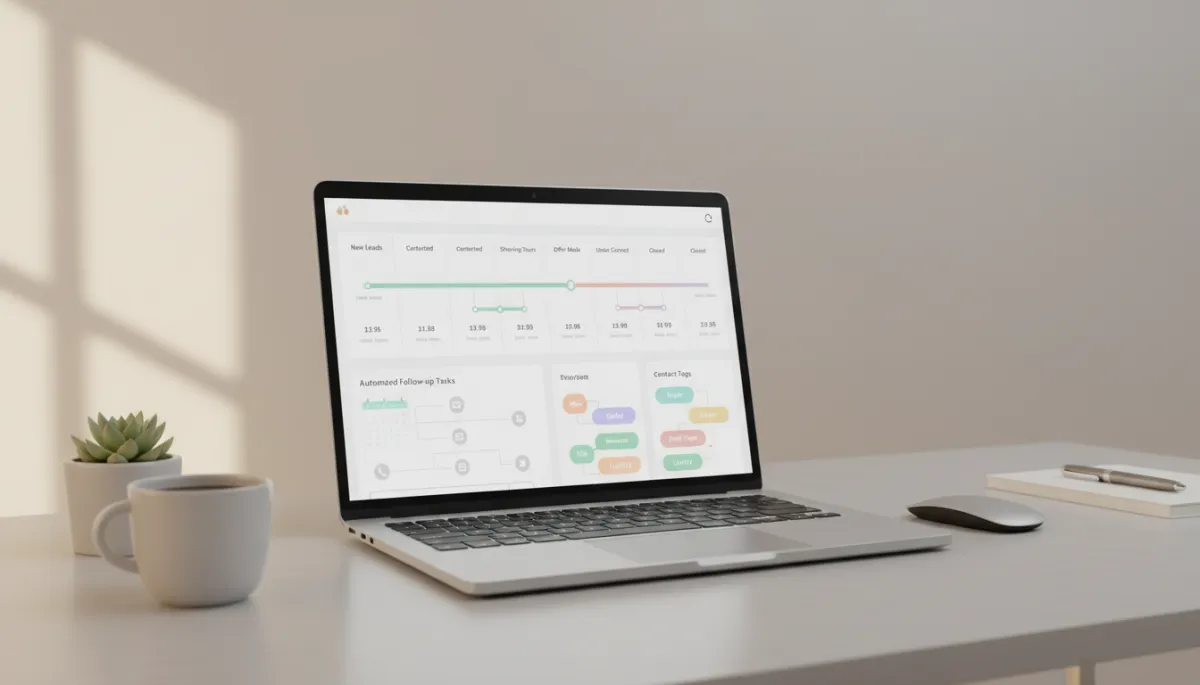
Well-designed realestatesystems turn one agent’s effort into a repeatable, scalable operation.
Where the Difference Really Shows: Follow-Up, Pipeline, and Capacity
1. Real Estate Follow-Up: Manual vs. Automated and Predictable
A productive agent often prides themselves on “always following up.” But if their real estate follow up lives in their head, on sticky notes, or in a messy inbox, it is not scalable. As soon as they get busy, follow-up becomes inconsistent, delayed, or forgotten. Warm leads cool off. Prospects slip through the cracks. Past clients drift away to other agents.
A scalable agent builds a follow-up engine inside a real estate CRM. Every new lead is tagged, placed into a pipeline stage, and automatically enrolled into a sequence of emails, texts, and tasks. The system reminds the agent (or their team) who to call, when, and why. Real estate productivity here is measured not by how many calls you remember to make, but by how many touches your system delivers every week, no matter how busy you are.
2. Pipeline Management: Deals vs. Data-Driven Decisions
A productive Real Estate Agent knows what is under contract and what is closing soon. A scalable agent knows exactly how many leads are at each stage of their pipeline, what their conversion rates are, and how many new opportunities they need to hit their income goals six months from now. Their real estate systems provide dashboards and reports, not just reminders.
This data-driven view lets a scalable agent make smarter decisions: when to invest in marketing, when to hire an assistant, or when to expand into a new farm area. Scalability in real estate depends on seeing your business as a set of measurable processes rather than a collection of one-off wins.
3. Capacity: Personal Limits vs. Leveraged Growth
An experienced real estate agent who is merely productive eventually hits a wall: there are only so many buyers you can drive around town and so many listings you can personally manage. A scalable agent anticipates this and builds leverage early. They document how they handle listings, how they onboard buyers, and how they run open houses—then delegate or automate parts of those processes.
Admin tasks move to a virtual assistant following clear checklists.
Transaction coordination is standardized and partially automated through templates.
Marketing campaigns are built once, then reused and improved, not reinvented every time.
This is the heart of being a truly scalable agent: your capacity grows because your systems and team grow, not because you sacrifice more evenings and weekends.
How to Move from Productive to Scalable: Practical Steps
Step 1: Audit Your Current Real Estate Productivity
Start by listing everything you do in a typical week as a real estate agent. Highlight tasks that:
Repeat frequently (showing confirmations, sending updates, scheduling inspections).
Could be done by someone else with the right instructions.
Depend on your memory rather than a system (most real estate follow up falls here).
This audit reveals where you are productive but not yet scalable. These are prime candidates for automation or delegation using better real estate systems.
Step 2: Implement or Upgrade Your Real Estate CRM
A modern real estate CRM is the backbone of a scalable business. It should centralize your contacts, track every interaction, and power automated workflows for lead nurturing and client communication. When evaluating tools, look for:
Visual pipelines for buyers, sellers, and past clients.
Automated email and text sequences for long-term real estate follow up.
Task reminders tied to pipeline stages and transaction milestones.
💡 Pro Tip: Do not just buy a real estate CRM—commit to using it as the single source of truth for your business. If it is not in the CRM, it does not exist.
Step 3: Standardize Your Core Real Estate Systems
To become a truly scalable agent, document how you handle the most common and critical parts of your business. For example:
Listing launch checklist: photos, sign installation, marketing copy, syndication.
Buyer onboarding process: consultation, financing pre-approval, search criteria setup, showing plan.
Transaction-to-close workflow: inspections, appraisals, repairs, communication cadence.
These documented real estate systems can be turned into checklists, templates, and automations that anyone on your team can follow. That is how Real Estate Productivity evolves into true scalability in Real Estate.
The Mindset Shift: From Solo Producer to Business Builder
At the core, the difference between a productive real estate agent and a scalable one is mindset. The productive agent asks, “How can I do more?” The scalable agent asks, “How can this business deliver more value with or without me?” One is focused on personal heroics; the other is focused on designing a repeatable, reliable machine for serving clients at a high level.
If you are already an experienced real estate agent, you have the relationships, market knowledge, and negotiation skills to succeed. The next step is to wrap those strengths in systems: a powerful real estate CRM, thoughtful real estate follow up campaigns, and documented real estate systems that anyone on your team can execute. That is how you move from being simply productive to becoming a truly scalable agent.
In a shifting market, the Real Estate Agent who wins is not just the one who can work the hardest today. It is the one who builds a business that can adapt, grow, and thrive tomorrow—without requiring every ounce of their personal energy. Productivity gets you started. Scalability is what lets you stay in the game, grow your income, and reclaim your time.
Shawn Bell is the founder of The Realtors Blueprint, a system installation platform built specifically for experienced agents. If you recognized your business in this article, the [Leak Check] shows you exactly where your follow-up infrastructure is breaking down — and what to fix first.


