Optimize Your Real Estate Business Operations
Real Estate Business, Operations, Systems, CRM
What Running Your Real Estate Business Like a Business Actually Means Operationally
Many agents say they want to “treat real estate like a real business,” but few translate that promise into daily operations. For a modern realestateagent or experiencedrealestateagent, the difference between a hustle and a true Real Estate Business is found in systems, structure, and data-driven execution. This article breaks down what that actually looks like in practice, from realestatefollowup to realestateCRM and realestateoperationalefficiency.
From Solo Hustle to Real Estate Business: The Operational Mindset Shift
Running a Real Estate Business like a business starts with a mindset shift: you are not just a salesperson; you are the CEO of a small but powerful enterprise. That means your time, energy, and decisions are guided by process, not just personality or mood. Operationally, this shift shows up in three ways:
You design repeatable systems for how leads, clients, and transactions are handled.
You measure performance using clear numbers, not gut feelings alone.
You treat your time as your most valuable asset and protect it with structure.
This is the foundation of professional Real Estate Management: every core activity in your business has a defined way it’s done, tracked, and improved over time. That’s what separates an experiencedrealestateagent with a stable pipeline from someone constantly starting from scratch each month.
Systematizing Lead Generation and Real Estate Follow-Up
In a true Real Estate Business, leads don’t just “show up” and then get handled however you feel that day. There is a clear, documented path from first contact to signed agreement. Operationally, that means:
Defined lead sources: You know exactly where your leads come from—referrals, open houses, online ads, social media, farming—and you track volume and conversion for each.
Standard intake process: Every new contact is added immediately into your realestateCRM with tags, source, and notes. No more business cards sitting in the car or DMs forgotten in your inbox.
Scripted first touch: You have a consistent way you introduce yourself, qualify needs, and set expectations, whether it’s via phone, email, or text.
Most importantly, your realestatefollowup is not random. You operate from a follow-up plan that defines:
How quickly you respond to new leads (e.g., within 5–15 minutes during business hours).
How often you follow up in the first 30 days, 90 days, and beyond.
Which channels you use (call, text, email, social) and when.
💡 Pro Tip: A business-run operation assumes every lead is long-term. Even if they are “just browsing,” they go into your system with a nurture plan, not a mental note.
Building a Real Estate CRM That Actually Runs Your Day
A realestateCRM is not just a contact database; it is the operational backbone of your Real Estate Business. When used correctly, it tells you who to talk to, when to reach out, and what to say based on previous interactions. Operationally, that means:
Every contact is categorized: buyer, seller, investor, vendor, sphere, past client, hot, warm, or nurture. Tags and segments are non-negotiable for realestateoperationalefficiency.
Tasks and reminders drive your day. Instead of scrolling your phone wondering who to call, you simply open your CRM and execute the follow-up tasks it shows you.
Automated workflows handle routine touches—birthday messages, home anniversary check-ins, market updates—so you stay top of mind at scale.
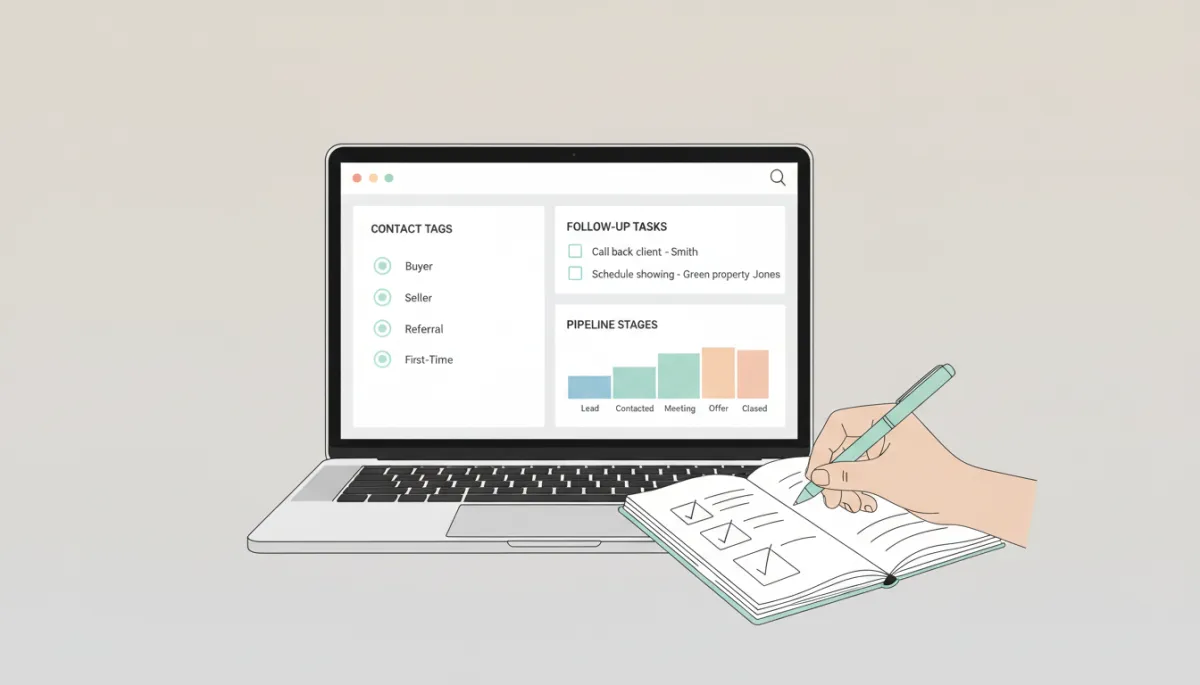
A well-configured realestateCRM turns daily chaos into a clear, prioritized action list.
For an experiencedrealestateagent, the CRM becomes the single source of truth: if it’s not in the system, it doesn’t exist. That discipline is what enables consistent Real Estate Management, even as your volume grows and your calendar fills up.
Transaction Management as a Repeatable, Documented Process
Another hallmark of running your real estate operation like a business is standardized transaction management. Instead of reinventing the wheel with every buyer or seller, you rely on checklists, timelines, and templates. Operationally, this includes:
Listing checklist: A step-by-step process from pre-listing consultation, pricing strategy, and staging, to photography, marketing launch, showings, feedback, and offer review.
Buyer journey map: A defined path from initial consultation and pre-approval to showings, offers, inspections, and closing, with clear communication milestones along the way.
Template library: Standard email templates for updates, next steps, inspection responses, and closing instructions to save time and maintain a professional tone.
These realestatesystems reduce errors, protect your reputation, and create a consistent experience for every client. They also make it easier to bring on support staff or a transaction coordinator because the “how we do things” is already documented.
Time Blocking and Calendar Discipline: Owning Your Schedule
A business-run operation does not treat time as an afterthought. Your calendar is a strategic tool, not a suggestion. Operationally, this means:
You time-block key activities: prospecting, client updates, market research, content creation, and admin work each have dedicated slots.
You protect lead generation time as non-negotiable. Even in busy seasons, the pipeline must be fed, and your realestatefollowup windows remain intact.
You batch similar tasks for better realestateoperationalefficiency—returning calls in one block, writing offers in another, reviewing files in a third.
This discipline allows you to scale your Real Estate Business without burning out. Instead of reacting to every notification, you operate from a plan that supports both production and personal life.
Tracking Numbers and Making Data-Driven Decisions
Businesses run on numbers, not vibes. To operate as a professional Real Estate Business, you need a simple scorecard you review weekly and monthly. At a minimum, track:
Number of new leads by source.
Appointments set and held (buyers and sellers).
Signed agreements, active clients, and under-contract deals.
Conversion rates at each stage and average days from lead to closing.
When you review these regularly, you start making smarter decisions about marketing spend, where to double down, and where to cut. This is the essence of Real Estate Management: using data to guide strategy rather than guessing what worked last month.
Delegation, Vendors, and Building a Support Team
Even if you are a solo realestateagent, running your business like a business means you do not try to do everything yourself forever. Operational excellence involves leveraging others so you can stay in your highest-value activities: meeting clients, negotiating, and advising. Practically, this could mean:
Using a transaction coordinator to manage paperwork, deadlines, and compliance once a deal is under contract.
Partnering with trusted vendors—photographers, stagers, inspectors, lenders—who fit into your documented processes and service standards.
Bringing on a virtual assistant for database maintenance, realestateCRM updates, and marketing tasks like social media scheduling or email campaigns.
Delegation only works when you have clear realestatesystems. When your processes are documented, new team members can plug in quickly, and your client experience stays consistent even as you grow.
Turning Operational Discipline into Long-Term Freedom
Ultimately, running your real estate business like a business is not about being rigid for its own sake. It is about building a Real Estate Business that is predictable, profitable, and eventually transferable—whether that means growing a team, selling your book of business, or simply enjoying more freedom while maintaining strong income.
Operationally, that looks like:
Clear, repeatable realestatesystems for lead generation, follow-up, and transaction management.
A realestateCRM that runs your day and protects every relationship in your database.
Time-blocked schedules, tracked numbers, and decisions grounded in data, not drama.
When you embrace these operational realities, you stop building a career that depends on you working harder every year and start building a Real Estate Business that can support your life, your goals, and your clients at a higher level. That is what it truly means to run your real estate business like a business.
Shawn Bell is the founder of The Realtors Blueprint, a system installation platform built specifically for experienced agents. If you recognized your business in this article, the [Leak Check] shows you exactly where your follow-up infrastructure is breaking down — and what to fix first.


