
Build a Real Estate Business with Predictable Closings
Real Estate, Business Growth, Systems, Lead Generation
How to Build a Real Estate Business That Produces Predictable Monthly Closings
Predictable monthly closings are not a matter of luck; they are the result of clear strategy, disciplined execution, and well-designed real estate systems. Whether you are a new real estate agent or an experienced real estate agent ready to scale, building a business that closes consistently each month requires you to think like a CEO, not just a salesperson.
Step 1: Define What “Predictable” Means in Your Market
For a professional real estate agent, “predictable” is not a vague feeling of being busy. It is a specific, measurable target. Start by deciding how many closings you want per month and reverse-engineer the numbers required to support that goal. For example, if your average conversion rate from appointment to signed agreement is 60%, and from signed agreement to closing is 80%, you can calculate how many new appointments you need every month to hit your closing target with confidence.
This simple exercise turns wishful thinking into a professional production plan. An experienced real estate agent reviews these metrics quarterly and makes adjustments as the market shifts, ensuring that the business is driven by data, not emotion or market rumors.
Step 2: Build a Lead Generation Engine, Not One-Off Campaigns
Predictable monthly closings begin with predictable real estate lead generation. Relying on sporadic referrals or the occasional hot listing lead creates feast-or-famine income. Instead, design a diversified lead generation engine with multiple reliable sources, such as:
Sphere of influence and past clients with structured outreach
Online leads from portals, paid ads, or SEO-optimized content
Open houses, community events, and local networking for in-person connections
Strategic partnerships with lenders, attorneys, and relocation companies
Each channel should have a clear process: how leads are captured, how they are tagged in your real estate CRM, and how quickly they receive their first touch. Over time, you will see which sources consistently produce qualified clients and which need to be refined or replaced, accelerating real estate business growth without guesswork.
Step 3: Treat Your CRM as Mission-Critical Infrastructure
A professional, predictable business cannot run on sticky notes and scattered spreadsheets. Your real estate CRM is the backbone of your operation. It should contain every contact, every conversation, and every next step. The goal is simple: no lead or client should ever fall through the cracks because you “forgot to follow up.”
At a minimum, your CRM should allow you to:
Capture new leads automatically from all real estate lead generation channels
Segment contacts by source, timeline, and motivation level
Assign tasks and reminders for timely real estate follow up
Track pipeline stages from new lead to closed transaction
💡 Pro Tip: Block 30 minutes at the start and end of every workday for CRM review. This single discipline separates the average real estate agent from the truly consistent top producer.
Step 4: Systematize Real Estate Follow Up for Every Stage of the Funnel
Most agents do not have a lead problem; they have a follow-up problem. Predictable closings come from consistent, value-driven real estate follow up. Design specific follow-up plans for each category of contact, such as:
New online leads: Quick first response, then a 10–14 day intensive touch plan (calls, texts, and emails) followed by long-term nurture
Warm prospects: Weekly property updates, market insights, and check-in calls tailored to their timeline
Past clients and sphere: Monthly email newsletter, quarterly calls, and annual real estate reviews
These follow-up cadences should live inside your real estate CRM as automated workflows or task sequences. That way, real estate systems do the heavy lifting, and you simply execute the highest-value conversations each day. Over time, you will see that your pipeline is always full of clients at different stages, smoothing out the peaks and valleys in your closing calendar.
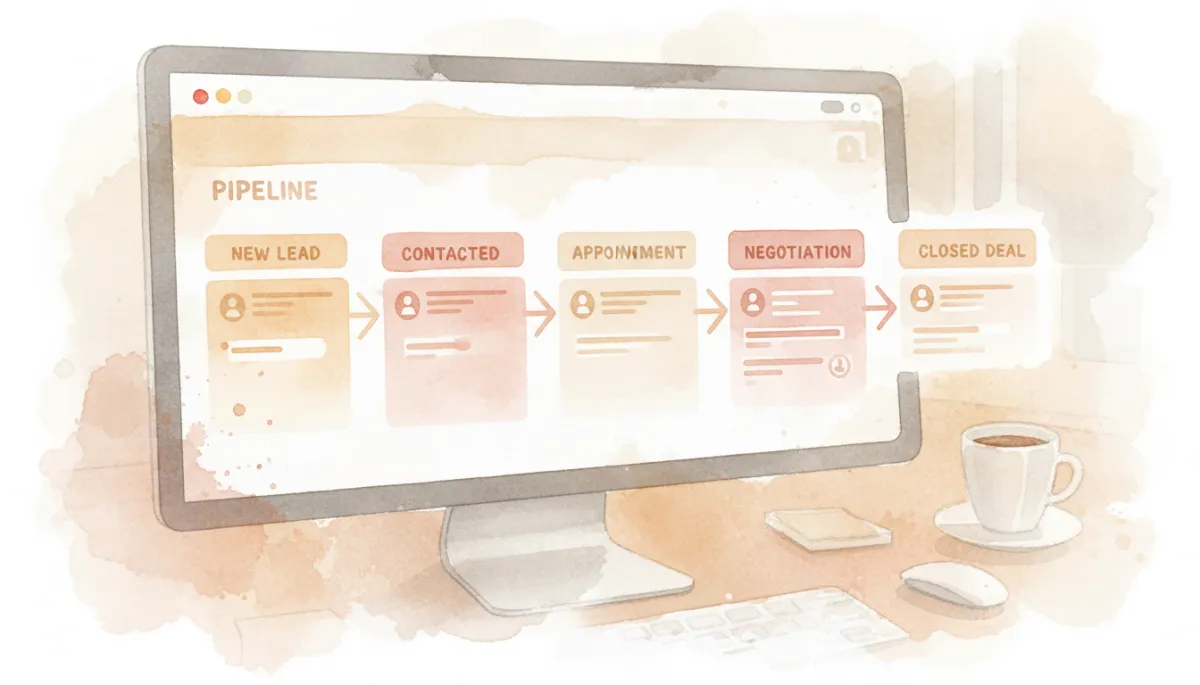
A well-structured CRM pipeline turns scattered leads into steady monthly closings.
Step 5: Standardize Your Client Experience with Repeatable Systems
Experienced real estate agents rarely reinvent the wheel for each client. Instead, they rely on documented real estate systems that ensure every buyer and seller receives a consistent, professional experience. This not only improves client satisfaction and referrals; it also makes your results more predictable because you are no longer improvising under pressure.
Consider creating checklists and templates for:
Listing intake, pricing strategy, and pre-launch marketing activities
Buyer consultations, financing pre-approval, and showing protocols
Offer negotiation steps, communication standards, and contingency tracking
Under-contract milestones, from inspections to closing day logistics
When these real estate systems are integrated with your CRM and calendar, you gain visibility into where every transaction stands. This clarity makes it far easier to forecast which deals will close this month, which are on deck for next month, and where potential bottlenecks might delay a closing.
Step 6: Protect Your Time with a CEO-Level Weekly Schedule
Predictable production is impossible if your calendar is chaotic. High-performing professionals design a weekly schedule that prioritizes revenue-generating activities and protects deep work time. A simple framework is to divide your week into blocks for:
Lead generation and prospecting
Real estate follow up and CRM management
Client appointments and showings
Transaction management and systems improvement
By treating these blocks as non-negotiable, you ensure that the essential drivers of real estate business growth happen every week, regardless of how busy you become with current clients. Over time, this disciplined schedule compounds into a steady, reliable flow of new business and closings.
Step 7: Measure, Refine, and Scale Like a Professional
The final ingredient in building a real estate business with predictable monthly closings is a commitment to continuous improvement. Track a small set of core metrics: number of new leads, conversations, appointments, signed agreements, and closed deals. Review these numbers weekly and monthly to spot trends early.
When you see a bottleneck—perhaps leads are plentiful but appointments are low—adjust your scripts, speed to lead, or qualification process. When conversion from contract to close drops, examine your transaction management systems and vendor partners. This data-driven mindset allows both the solo real estate agent and the growing team leader to make smart decisions that support sustainable real estate business growth.
Bringing It All Together
Building a real estate business that produces predictable monthly closings is not about working more hours or chasing every shiny new marketing tactic. It is about designing a professional operation: a clear production plan, dependable real estate lead generation, a robust real estate CRM, disciplined real estate follow up, and streamlined real estate systems that deliver a consistent client experience.
When you approach your career with this level of intention, you stop riding the emotional rollercoaster of unpredictable income. Instead, you become the experienced real estate agent clients trust, with a business that runs on process, not personality alone. The result is a stable, scalable practice where monthly closings are no longer a surprise—they are the natural outcome of the systems you have built.
The next step is action. Choose one area—lead generation, CRM setup, follow-up systems, or weekly scheduling—and upgrade it this week. Then, keep iterating. Over the coming months, you will see your pipeline stabilize, your confidence rise, and your real estate business growth become both predictable and sustainable.
Shawn Bell is the founder of The Realtors Blueprint, a system installation platform built specifically for experienced agents. If you recognized your business in this article, the [Leak Check] shows you exactly where your follow-up infrastructure is breaking down — and what to fix first.


