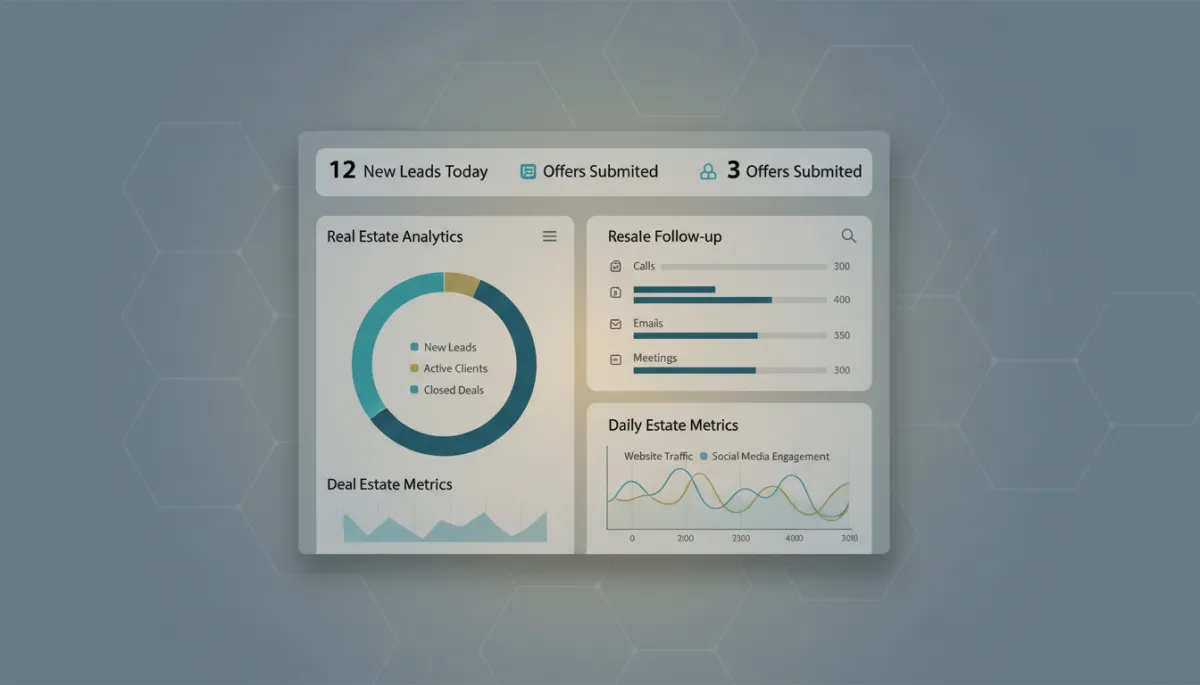
Optimize Your Real Estate CRM Dashboard
Real Estate, CRM, Productivity
What a Properly Configured Real Estate CRM Dashboard Should Show You Every Morning
For a busy real estate agent, the first screen you see each day can make or break your productivity. A well-designed, properly configured real estate CRM dashboard should act like a personal sales manager, surfacing the most important information and daily real estate metrics before you even finish your first coffee. Instead of clicking through tabs and reports, you should glance once and know exactly who to call, which deals to push forward, and where your pipeline may be at risk.
The Morning Mission: One Screen, Total Clarity
An experienced real estate agent knows that the most valuable resource in this business is time. The purpose of a morning dashboard is simple: transform raw data into clear priorities. The right CRM dashboard features should answer three questions in seconds:
Who do I need to talk to today to move my business forward?
Which deals and listings require immediate attention or rescue?
Am I on track to hit my weekly, monthly, and quarterly goals?
When your real estate systems are configured correctly, you do not log in to hunt for information. You log in to be told, clearly and visually, how to win the day. That is where thoughtful real estate analytics and dashboard design come together.
1. Priority Follow-Up List: Your Non-Negotiable Calls and Messages
The heart of a real estate CRM dashboard is a laser-focused real estate follow up list. Every morning, you should see a clearly ranked set of people to contact, filtered and prioritized based on urgency and opportunity. This is where top producers separate themselves from the pack: they treat follow-up as a system, not a guess.
Overdue follow-ups: Prospects or clients you should have contacted yesterday or earlier this week, highlighted so they cannot be ignored.
Hot leads: New inquiries, portal leads, open house visitors, and referrals that have interacted recently and need fast response.
Active clients: Buyers and sellers in motion—touring, making offers, reviewing contracts—who require consistent touchpoints.
Each contact in this widget should show at least their name, lead source, last touch date, next task, and a simple indicator of their stage in your pipeline. For a working real estate agent, this becomes your call sheet, text list, and email queue all in one place, ensuring no relationship slips through the cracks.
2. Pipeline Snapshot: Listings and Deals by Stage
Your second essential view is a visual snapshot of your pipeline. A professional real estate CRM should give you a simple, at-a-glance breakdown of buyers and sellers by stage, from new lead to closed transaction. This is where daily real estate metrics become truly actionable.
New leads: How many new contacts entered your system in the last 24 hours, and how many have been responded to within your target timeframe?
Active buyers: Clients with current searches, showings scheduled, or offers in play, grouped by urgency and price point.
Active listings: Properties on the market, showing days on market, number of showings, and any that may need price or marketing adjustments.
Pending and under contract: Deals in escrow, with closing dates and critical milestones highlighted so deadlines are never missed.
For the experienced real estate agent, this pipeline view is more than vanity metrics. It tells you where to apply pressure today: which listing needs a price conversation, which buyer needs fresh inventory, and which contract requires a check-in with lenders, attorneys, or inspectors.
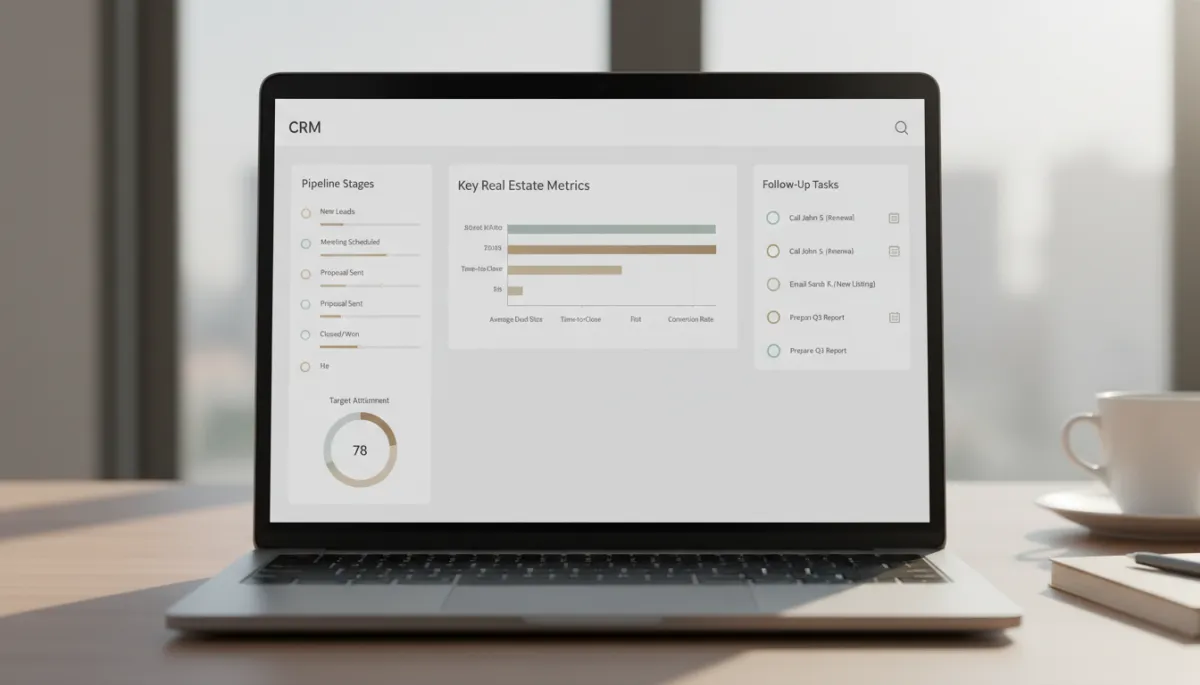
A clear pipeline view helps agents spot bottlenecks and protect future income.
3. Daily Activity Targets and Progress: Measure What You Can Control
Transactions are the result of dozens of small actions taken consistently. A strong set of CRM dashboard features will surface the activities you can control each day and compare them to your goals. This is where real estate analytics can be powerful without being complicated.
Number of calls made yesterday and scheduled for today.
Texts, emails, and social touches logged in the system.
Appointments set: listing presentations, buyer consultations, showings, and open houses.
New leads added and percentage contacted within your ideal response window.
The most effective dashboards display these as simple progress bars or counters, comparing your actual performance to your daily and weekly targets. For any real estate agent trying to build consistency, seeing “3 of 10 calls completed” or “1 of 3 appointments booked” first thing in the morning can be a powerful nudge toward disciplined action.
4. Revenue and Goal Tracking: Are You On Pace?
While activity metrics keep you moving, you also need high-level daily real estate metrics that show whether that activity is translating into income. A properly configured real estate systems stack will feed your CRM data into simple, meaningful goal tracking widgets on your dashboard.
Closed volume year-to-date versus your goal, with a clear percentage to target.
Pending volume and projected commission income, so you can see future cash flow at a glance.
Listings taken and buyers signed this month, compared to your ideal pace.
This layer of real estate analytics does not need to be complex. The key is relevance: numbers that connect directly to your business plan and keep your focus on the bigger picture, even as you dive into the day’s tasks and follow-ups.
5. Time-Sensitive Alerts: Deadlines, Expirations, and Risks
A strong real estate CRM dashboard also acts as an early warning system. Every morning, you should see a concise list of time-sensitive items that could cost you money or reputation if missed. These alerts help an experienced real estate agent stay proactive instead of reactive.
Contract deadlines approaching: inspection periods, financing contingencies, appraisals, and closing dates that require action today or this week.
Listing expirations or upcoming renewals, giving you time to re-engage clients and adjust strategy.
Stale leads or clients with no contact in a set number of days, flagged before they drift away to another agent.
These alerts should be concise, color-coded where appropriate, and linked directly to the underlying contact or transaction record. With the right CRM dashboard features, you can move from “I hope I remember everything” to “my system reminds me before anything slips.”
6. Lead Source and Marketing Performance: What’s Actually Working?
Finally, a truly effective dashboard gives you quick insight into where your business is coming from. This is another area where real estate analytics can stay simple but powerful. Each morning, you should be able to see which lead sources generated contacts, appointments, and contracts in the last week or month, without running a detailed report every time.
New leads by source: portals, website, social media, open houses, referrals, farming, and past clients.
Appointments set and deals under contract by source, showing which activities are actually producing results.
Basic conversion rates, such as lead-to-appointment and appointment-to-contract, for your main channels.
For a growth-minded real estate agent, this insight is critical. It lets you double down on what works, cut what does not, and make smarter decisions about where to invest your time and marketing budget. It also keeps you honest about whether your real estate systems are aligned with your long-term business strategy.
Turning Your CRM Dashboard Into a Daily Ritual
A properly configured real estate CRM dashboard is not just a collection of graphs and numbers. It is a morning ritual, a habit that anchors your day in clarity and intention. When you build your dashboard around daily real estate metrics that actually matter—follow-ups, pipeline health, activity, revenue, alerts, and lead sources—you transform your technology from a database into a decision-making tool.
Whether you are a newer real estate agent or an experienced real estate agent managing a large book of business, the goal is the same: log in each morning and instantly know your top three priorities for the day. With the right real estate CRM setup and thoughtful CRM dashboard features, your dashboard becomes the quiet, reliable partner that keeps you focused, consistent, and ultimately more profitable.
If your current dashboard feels cluttered, confusing, or incomplete, it may be time to step back and redesign it around these core elements. Start by asking: “What do I absolutely need to see every morning to run my business like a CEO?” Then configure your real estate systems to answer that question on one clean, neutral-toned screen—before the day runs away from you.
Shawn Bell is the founder of The Realtors Blueprint, a system installation platform built specifically for experienced agents. If you recognized your business in this article, the [Leak Check] shows you exactly where your follow-up infrastructure is breaking down — and what to fix first.


