
Boost Real Estate Success with Effective Systems
Real Estate, Systems, Productivity
What Consistent Real Estate Production Actually Requires at a Systems Level
Consistent production in real estate is rarely about one more open house or one more cold call. It’s about the invisible machine behind the scenes: the systems that turn random hustle into predictable, repeatable results for every real estate agent, from new licensees to the most experienced real estate agent in your market.
Why “Working Harder” Stops Working
Many agents hit a ceiling where more effort no longer equals more income. You can only make so many calls, attend so many listing appointments, or host so many showings in a week. At that point, the difference between inconsistent closings and steady growth is not hustle; it’s real estate systems that multiply your effort and protect your time.
Systems-level thinking asks a different question: instead of “What else can I do today?” it asks, “What repeatable process can I build so this result happens every week, whether I’m in the office, on vacation, or slammed with showings?” That mindset shift is the foundation of consistent production for realtors.
The Four Core Engines of a Systems-Driven Real Estate Business
At a systems level, consistent real estate production usually depends on four tightly connected engines working together, not in isolation:
A predictable lead generation machine
A disciplined real estate follow up system
A streamlined real estate workflow for active clients and transactions
A retention and referral engine that compounds over time
Each engine is powered and coordinated by technology—most notably, a well-implemented real estate CRM—and by clear, written processes that anyone on your team can follow. This is what separates a personality-driven practice from a true real estate business with real business efficiency.
1. Turning Lead Generation into a Repeatable System
Most agents know how to generate a burst of leads—run a campaign, host a client event, door knock a neighborhood. At a systems level, the question is: How do we guarantee a minimum number of new conversations every week? That means documenting exactly where leads come from, how often those activities run, and who is responsible for each step.
Schedule recurring lead activities on your calendar (and your team’s).
Track source performance in your CRM: referrals, online leads, open houses, farming, social media, and more.
Standardize intake: every new lead gets captured in the same place, with the same minimum data.
The experienced real estate agent treats lead generation like a production line, not a guessing game. The output—new prospects—feeds directly into your follow-up engine.
2. Real Estate Follow Up: From Random Calls to a Follow-Up Machine
The biggest leak in most pipelines isn’t lack of leads; it’s lack of consistent, structured real estate follow up. A systems-level business designs follow-up so that no one falls through the cracks, regardless of how busy you are this week or how long the lead’s timeline might be.
What a Follow-Up System Includes
Clear stages for every contact: new, nurtured, hot, active, past client, lost, etc.
Predefined touch patterns for each stage (calls, texts, emails, social touches, mailers).
Automated reminders and drip campaigns inside your real estate CRM.
Instead of waking up and wondering who to call, your system tells you exactly which prospects need attention today. That is the essence of real estate business efficiency: the mental load shifts from memory to process.
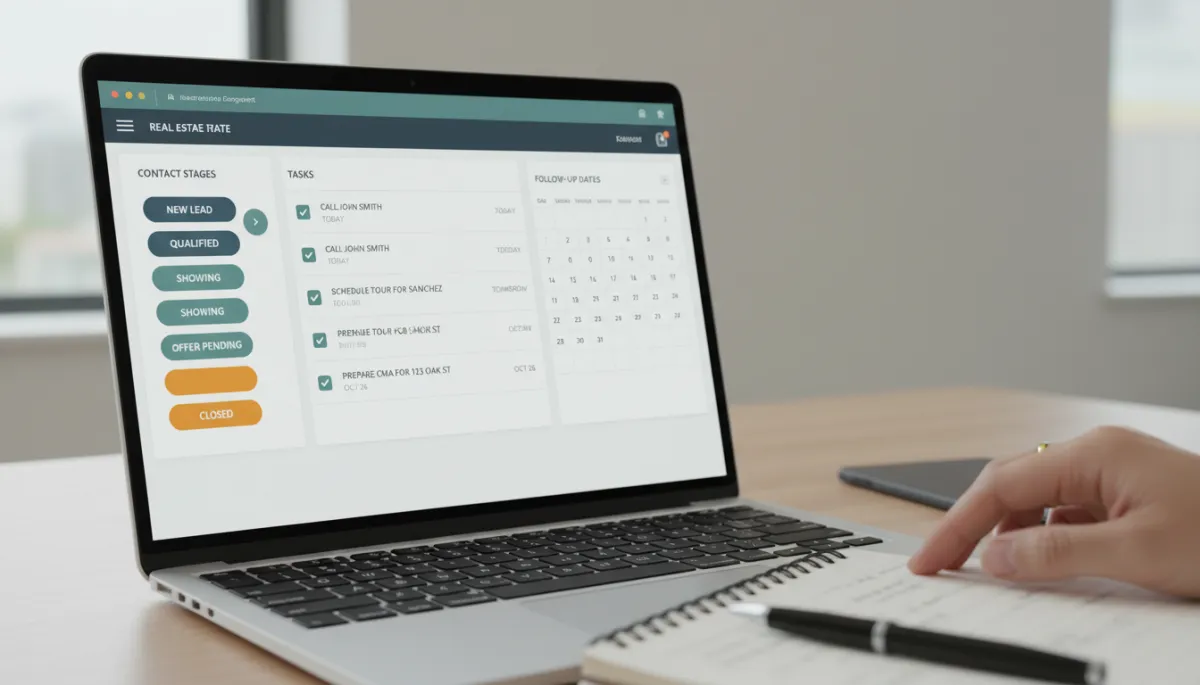
Structured follow-up turns forgotten leads into predictable appointments and closed deals.
3. Your Real Estate CRM as the Control Center
A real estate CRM is more than a digital Rolodex; it’s the control center for your entire operation. At a systems level, its job is to centralize information, automate routine tasks, and make your next best action obvious at all times. When configured well, it becomes the backbone of consistent production for realtors in any market or price point.
Every lead and client lives in one place, with notes, preferences, and history.
Automated nurture campaigns keep long-term leads warm without daily manual effort.
Task lists are generated by rules, not guesswork: new lead? Create a 10-touch sequence. Past client? Trigger quarterly check-ins.
💡 Pro Tip: The value of a CRM is not in how many features it has, but in how ruthlessly you use it to enforce your processes every single day.
4. Designing a Real Estate Workflow for Active Clients and Transactions
Once a lead converts, your real estate workflow determines how smoothly you move from contract to close. Inconsistent production often comes from deals consuming more time and energy than they should, leaving you with no bandwidth for prospecting. A systems-level workflow standardizes each stage of a transaction so you can deliver high service with less chaos.
Elements of an Efficient Transaction Workflow
Checklists for listings: prep, pricing, photography, marketing, showings, feedback, offers, and closing coordination.
Checklists for buyers: consultation, pre-approval, property search, tours, offers, inspections, and funding.
Templates for emails, text updates, and status reports to clients and cooperating agents.
When these workflows live inside your CRM or project management tool, you can see at a glance which tasks are due, which transactions are at risk, and where you can delegate. This is where an experienced real estate agent gains massive leverage: they aren’t reinventing the wheel on every file.
5. Building Real Estate Business Efficiency Through Delegation and Automation
Systems are what make delegation possible. Without clear processes, bringing on an assistant or transaction coordinator can actually slow you down. With documented workflows and CRM-based task lists, you can confidently hand off:
Data entry and contact updates
Routine follow-up touches that don’t require your direct voice
Transaction coordination tasks tied to checklist milestones
Automation handles another layer: scheduling emails, birthday campaigns, home anniversary check-ins, and market update reports. The combination of delegation and automation is what frees the real estate agent to focus on high-value activities: consultations, negotiations, and strategic relationships.
6. The Compounding Power of Retention and Referrals
Consistent production for realtors doesn’t come only from new leads; it comes from a growing base of past clients and advocates who send repeat and referral business. At a systems level, that means building a structured relationship plan for every closed client, not just staying “top of mind” when you remember.
Automated home anniversary and birthday messages through your CRM
Quarterly market updates or homeowner tips delivered by email or mail
A simple, repeatable system for asking for reviews and referrals at key moments
Over a few years, this retention engine can become your most powerful and cost-effective lead source, smoothing out the ups and downs of the market and reinforcing your brand as a trusted advisor, not just a one-time salesperson.
7. From Agent to Architect: Your Next Steps
The real shift is seeing yourself not only as a real estate agent, but as the architect of a business machine. An experienced real estate agent doesn’t rely on memory, willpower, or bursts of motivation. They rely on real estate systems that keep producing even when life gets busy or the market shifts.
Audit your current processes: Where are leads slipping? Where are you reinventing the wheel?
Choose or refine your real estate CRM and commit to using it as your single source of truth.
Document one workflow at a time—lead intake, follow-up, listing, buyer, or past client care—and build it into your tools.
When you do this, you move from chasing the next deal to operating a business that generates steady opportunities, protects your time, and delivers a consistent client experience. That is what consistent real estate production actually requires at a systems level—and it’s how you build a career that is both scalable and sustainable.
Shawn Bell is the founder of The Realtors Blueprint, a system installation platform built specifically for experienced agents. If you recognized your business in this article, the [Leak Check] shows you exactly where your follow-up infrastructure is breaking down — and what to fix first.


