
SMS Automation for Real Estate: Effective Strategies
Real Estate, SMS Automation, Lead Nurturing
SMS Automation in Real Estate: How to Stay Top-of-Mind Without Being Pushy
SMS can be one of the most effective tools in modern real estate marketing, but it can also backfire quickly if it feels intrusive. Used well, automated text messages help a real estate agent stay relevant, build trust, and close more deals—without annoying prospects. This guide shows real estate professionals how to use SMS automation strategically, supported by real estate CRM tools and systems, to improve realtor customer engagement while keeping communication respectful and human.
Why SMS Automation Belongs in Every Real Estate System
Text messaging has open rates that email can only dream of. For the busy real estate agent juggling listings, showings, and negotiations, SMS offers a direct, timely way to connect. When integrated into your real estate CRM and broader real estate systems, automation can:
Deliver instant confirmations for showings, open houses, and appointments
Support consistent real estate follow up with new and cold leads alike
Nurture real estate lead generation campaigns with timely, relevant touchpoints
What separates an experienced real estate agent from the rest is not just using automation, but using it thoughtfully. That means respecting consent, timing, and tone so your texts feel like a helpful nudge, not a hard sell.
Step 1: Start With Clear Permission and Expectations
The fastest way to come across as pushy is to text people who never asked to hear from you. Every SMS automation strategy in real estate should begin with explicit opt-in. Whether leads come from online real estate lead generation forms, open house sign-ins, or referral introductions, clearly state:
What kind of messages they will receive (updates, reminders, new listings, market tips)
How often you typically send texts (for example, “no more than a few times a month”)
That they can opt out at any time with a simple reply like “STOP”
💡 Pro Tip: Add a short consent line to every real estate marketing form: “By submitting, you agree to receive helpful SMS updates about your home search. Reply STOP to opt out anytime.”
When people know what to expect, they are far more receptive. This single step instantly shifts your SMS automation from “spammy” to “service-oriented.”
Step 2: Let Your Real Estate CRM Handle the Heavy Lifting
A strong real estate CRM is the backbone of effective SMS automation. Rather than blasting the same message to everyone, your CRM can segment contacts based on:
Buyer vs. seller vs. investor profiles
Stage in the pipeline (new lead, active client, under contract, past client)
Timeframe and budget, neighborhoods of interest, and property type
With this data, you can build real estate systems that send relevant, personalized messages automatically. For example:
A new buyer lead receives a welcome text within minutes: “Hi Sarah, this is Alex from Oak Street Realty. Thanks for inquiring about homes in Brookside. Would it help if I text you a shortlist of options under $600K?”
A seller lead gets a follow-up after downloading a market report: “Hi Mark, you requested the Midtown market update. If you’re curious what your place could sell for, I’m happy to run a quick estimate.”
These messages are triggered by behavior, not random schedules. That makes your real estate follow up feel timely and helpful, rather than relentless.
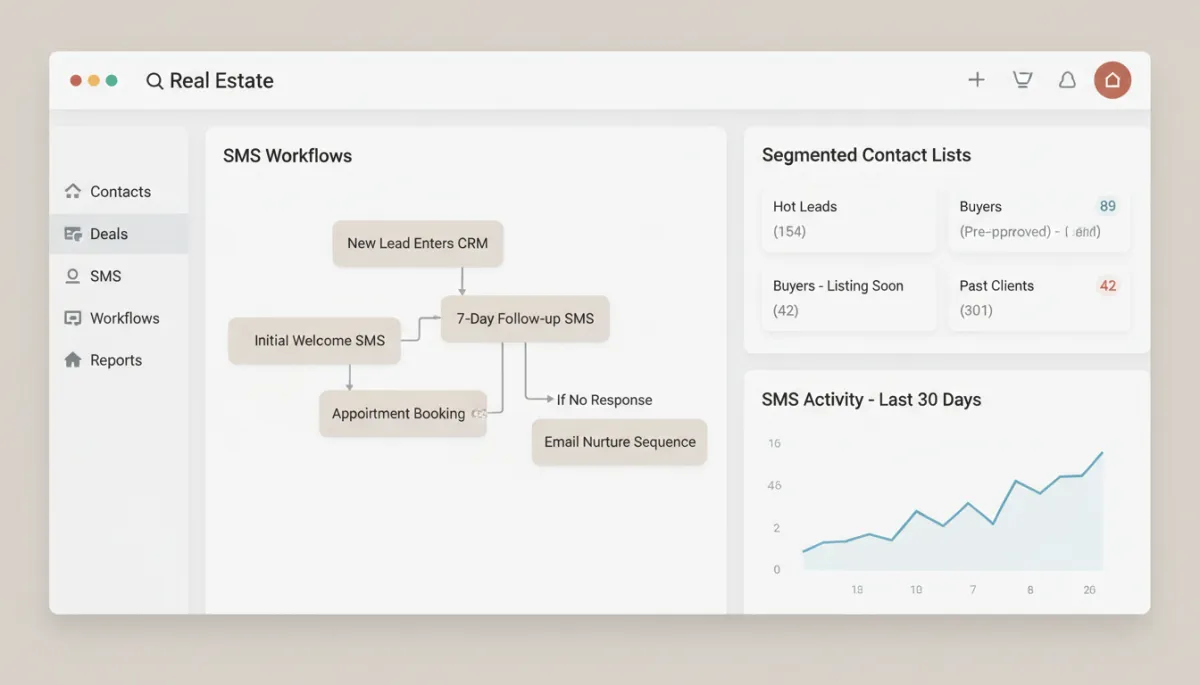
Segmented SMS workflows help agents send fewer texts while improving response rates.
Step 3: Craft Human, Conversational Messages—Not Scripts
Automation should never sound robotic. The most successful real estate agents use templates that feel like messages they would naturally send themselves. To avoid sounding pushy, focus on three principles: relevance, brevity, and choice.
Relevance: Tie Every Text to a Clear Benefit
Each automated SMS should answer the question, “What’s in it for the recipient?” Instead of “Are you ready to buy yet?” try:
“Three new homes just hit the market in your price range. Want me to text you the links?”
This positions you as a resource, not a salesperson chasing a commission.
Brevity: Respect Their Time and Attention
Long, multi-paragraph texts feel overwhelming. A concise, two–three sentence message is easier to read and reply to. An experienced real estate agent knows that the goal of SMS is to start a conversation, not to close the deal in one text.
Choice: Ask Permission Before Moving Forward
Building choice into your messages keeps them from feeling demanding. Use questions like:
“Would you like me to send more options like this?”
“Is it okay if I text you when something similar comes up?”
This simple habit dramatically improves realtor customer engagement because clients feel in control of the process.
Step 4: Build Smart SMS Journeys for Different Real Estate Scenarios
Instead of ad-hoc messages, map out a few core SMS automation journeys that align with your real estate systems. Here are three high-impact examples that feel helpful rather than pushy.
1. New Buyer Lead Nurture Sequence
Instant welcome (within 5 minutes): A warm introduction, confirmation of their criteria, and a simple question like, “Are you already working with an agent?”
24–48 hours later: A short message offering a curated list or a quick call, only if they’re interested.
Ongoing: Occasional texts when a standout property hits the market that fits their profile.
Every step is triggered by your real estate CRM based on lead status and activity, ensuring your real estate follow up is consistent but never overwhelming.
2. Listing Launch and Open House Promotion
Text interested buyers when a new listing matches their criteria, with a link and a question: “Want a private showing this week?”
Send a brief reminder the morning of an open house to those who RSVPed, including parking tips or entry instructions.
Because these messages are tied directly to specific events, they feel like service updates, not sales pushes.
3. Past Client Care and Referral Nurture
Anniversary messages: “Happy 1-year home anniversary! Hope you’re loving the place. If you ever need contractor recommendations, I’m here.”
Occasional market check-ins: “Quick heads-up: homes in your area are up about 7% this year. Want a quick update on your home’s value?”
This kind of gentle, value-first outreach keeps you top-of-mind for referrals and repeat business without constant selling.
Step 5: Set Boundaries on Timing and Frequency
Even the best-crafted text can feel pushy if it arrives at the wrong time or too often. As you design SMS automation inside your real estate CRM, define clear rules:
Quiet hours: Avoid sending texts early in the morning or late at night unless a client explicitly prefers it.
Maximum frequency: For most leads, one to two messages per week is plenty, unless they are actively engaged in a transaction.
Engagement-based throttling: If someone hasn’t replied in a while, slow down or pause the sequence rather than pushing harder.
📌 Key Takeaway: In real estate marketing, restraint can be a competitive advantage. Fewer, more thoughtful messages often lead to stronger relationships and better-qualified conversations.
Step 6: Measure, Refine, and Keep the Human Touch
SMS automation is not “set it and forget it.” The most effective real estate agents regularly review performance data from their real estate systems to see which messages drive replies, appointments, and signed agreements. Track:
Response rates to different message styles and calls-to-action
Opt-out rates after specific sequences or campaigns
How many SMS conversations convert into consultations or showings
Use this insight to refine your templates, adjust timing, and remove any messages that feel too aggressive. And remember: automation should only handle the first steps. Once a prospect replies, a real conversation with a real estate professional should take over. That blend of smart technology and genuine human interaction is where realtor customer engagement truly thrives.
Bringing It All Together: Helpful, Not Hounding
Used carelessly, SMS automation can damage your brand and turn promising real estate lead generation efforts into a list of frustrated contacts. Used thoughtfully, it becomes a powerful extension of you as an experienced real estate agent: responsive, organized, and genuinely helpful. By securing clear permission, leaning on your real estate CRM for smart segmentation, writing conversational messages, mapping out purposeful journeys, and respecting boundaries, you can stay top-of-mind without ever sounding pushy.
As you refine your real estate marketing strategy, treat SMS automation as a way to deliver timely value at scale. Each text should feel like a personal check-in from a trusted advisor, not a broadcast from a sales system. When you get that balance right, your real estate follow up becomes easier, your pipeline healthier, and your clients more eager to recommend you to the next buyer or seller in their circle.
Shawn Bell is the founder of The Realtors Blueprint, a system installation platform built specifically for experienced agents. If you recognized your business in this article, the [Leak Check] shows you exactly where your follow-up infrastructure is breaking down — and what to fix first.


